Ask anything
Start a new conversation below.
API de Claude Opus 4.8 para agentes de programación y trabajo del conocimiento
Crea aplicaciones de IA con mayor capacidad de programación, mejor capacidad de decisión en las tareas y una colaboración más fiable utilizando la API de Claude Opus 4.8 en EMix.ai.
Novedades en la API de Claude Opus 4.8
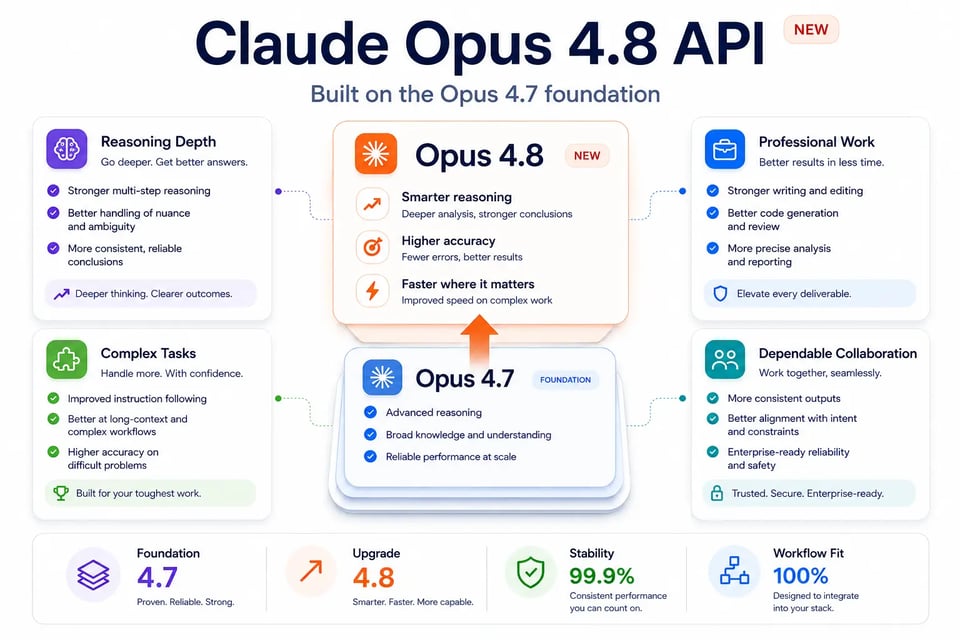
La API de Claude Opus 4.8 mejora la base de Opus 4.7
Desarrollada como la próxima versión de Claude Opus, la API de Claude Opus 4.8 mejora la base de Opus 4.7 manteniendo el enfoque del modelo en el trabajo profesional de alto valor. Los desarrolladores pueden utilizarla para aplicaciones que requieran un razonamiento más profundo, una colaboración más confiable y un mejor manejo de tareas complejas en flujos de trabajo técnicos e intensivos en conocimiento.
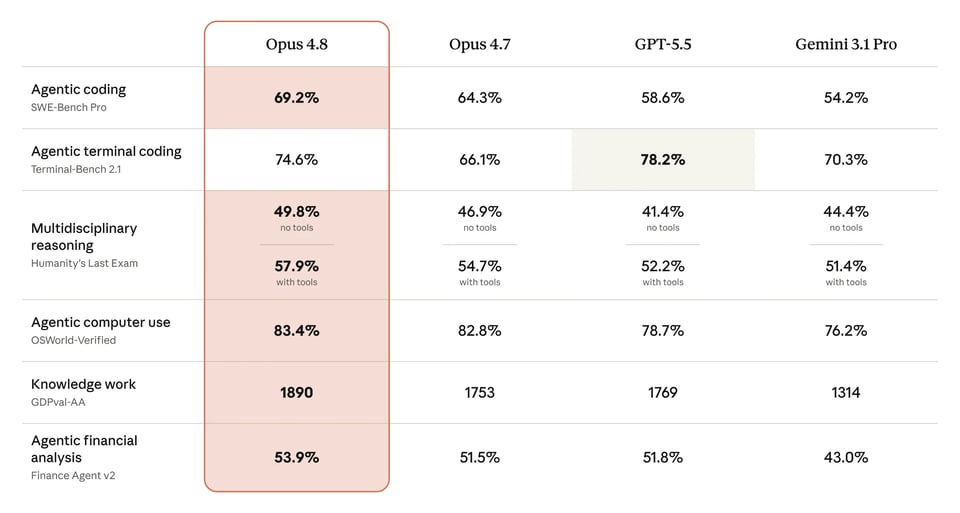
Programación basada en agentes, razonamiento y trabajo del conocimiento superiores con la API de Claude Opus 4.8
En las distintas categorías de pruebas de rendimiento, la API de Claude Opus 4.8 mejora en áreas como programación, habilidades agénticas, razonamiento y trabajo de conocimiento aplicado. Esto la convierte en una excelente opción para asistentes de ingeniería de software, herramientas de investigación, agentes de flujos de trabajo, sistemas de análisis de documentos y productos que requieren más que una generación de texto básica.
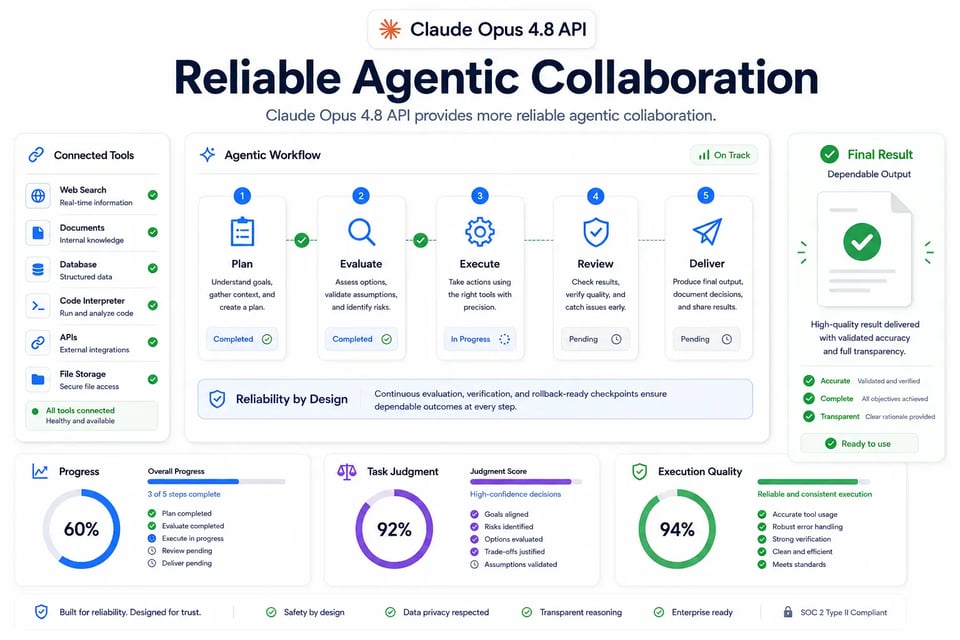
La API de Claude Opus 4.8 ofrece una colaboración agéntica más confiable
Las primeras pruebas destacan a Claude Opus 4.8 como un colaborador más eficaz al realizar tareas agénticas. Para los flujos de trabajo que requieren planificación, evaluación del progreso, ejecución de múltiples pasos y una evaluación cuidadosa de las tareas, la API de Claude Opus 4.8 puede ayudar a las aplicaciones a brindar una experiencia de usuario más confiable.
Mayor honestidad y reconocimiento de problemas de código en la API de Claude Opus 4.8
Una mejora clave de la API de Claude Opus 4.8 es su mayor honestidad durante el trabajo complejo. En lugar de afirmar avances con seguridad cuando la evidencia es débil, es más probable que Claude Opus 4.8 señale la incertidumbre y llame la atención sobre posibles problemas. En los flujos de trabajo de programación, también es menos probable que omita mencionar los fallos en el código que genera, lo que ayuda a los usuarios a revisar y verificar los resultados de manera más efectiva.
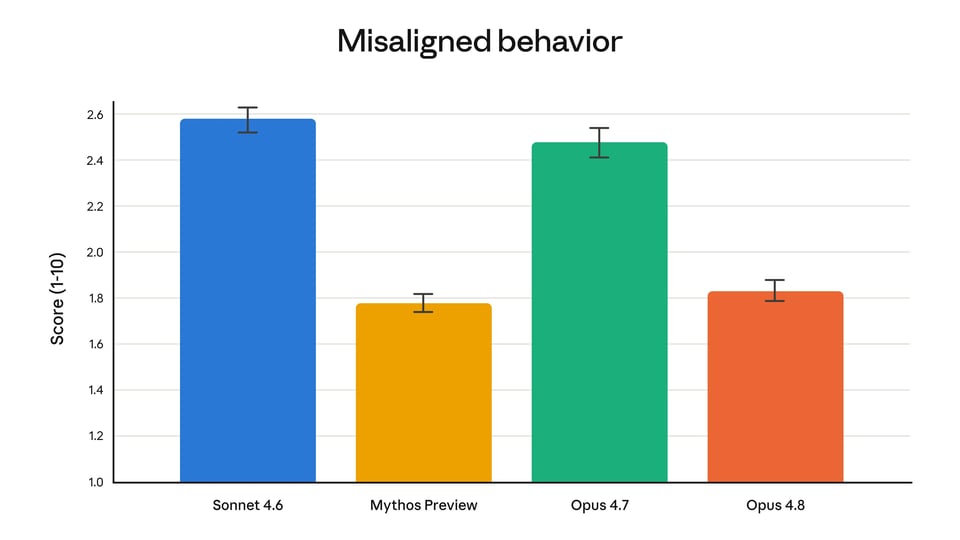
Cómo se compara Claude Opus 4.8 con otros modelos avanzados de IA
Claude Opus 4.8 se posiciona para programación compleja, razonamiento agéntico, trabajo de contexto largo y tareas de conocimiento profesional donde la fiabilidad importa más que la simple velocidad. En comparación con Opus 4.7, ofrece un comportamiento más refinado y una mayor honestidad; frente a Sonnet 5, se adapta mejor a flujos de trabajo agénticos más exigentes; respecto a GPT 5.5, presenta ventajas en tareas de ingeniería con múltiples archivos bajo restricciones; y en comparación con Mythos, sigue siendo la opción de nivel Opus más práctica y ampliamente disponible para su uso en producción.
| Área de comparación | Claude Opus 4.8 | Claude Opus 4.7 | Claude Sonnet 5 | GPT 5.5 | Claude Mythos |
|---|---|---|---|---|---|
| Model Positioning | Advanced Opus model for complex coding, agentic work, reasoning, and knowledge workflows | Previous Opus version with strong reasoning but less refined behavior | Balanced Claude model for faster, structured, and high-volume workflows | Frontier GPT model with strong coding fluency and general-purpose reasoning | Higher Claude tier for the most difficult reasoning and research tasks |
| Best Fit | Complex agents, large codebase work, long-form analysis, and high-value professional tasks | Workflows already calibrated around Opus 4.7 behavior | Structured tasks, real-time assistants, simpler agent steps, and scalable everyday use | Greenfield coding, test generation, cross-language translation, and developer productivity | Frontier research, hardest reasoning tasks, and specialized advanced workflows |
| Agentic Workflow Strength | Strong for planning, multi-step execution, tool-chain reasoning, and complex task recovery | Capable, but more likely to hedge, drift, or add unnecessary commentary | Reliable for predictable workflows, but weaker on open-ended planning and recovery | Strong general agent support, but task fit depends heavily on prompt and workflow design | Designed for deeper agentic capability, though access may be more limited |
| Coding Performance | Strong for multi-file reasoning, refactoring, bug localization, and constrained implementation | Good coding ability, but less consistent with strict instructions and style constraints | Useful for common coding tasks and structured implementation steps | Strong for first-pass code generation, cross-language translation, and conventional test writing | Expected to target harder coding and reasoning tasks beyond standard Opus-level use |
| Instruction Following | Better at staying aligned with detailed, multi-part instructions across longer tasks | More prone to over-explaining, softening, or adding caveats | Works well when workflows are clearly defined and predictable | Handles conversational prompts well, but may be less precise with strict constraints | Built for advanced reasoning, though practical behavior depends on deployment context |
| Reliability and Judgment | Stronger honesty, better uncertainty awareness, and improved handling of possible code flaws | More likely to hedge or agree with flawed premises without enough pushback | Reliable for routine tasks, but less robust when ambiguity and error recovery increase | Strong output fluency, though constrained tasks may need more review | Highest-capability direction, but not the default practical choice for most builders |
| Long-Context Work | Strong for maintaining task state, tracking dependencies, and preserving context over complex workflows | Good long-context ability, but less stable in demanding sessions | Handles long contexts, but works best with clearer and more bounded workflows | Capable with long inputs, though context-use behavior depends on task type | Positioned for extended reasoning and very hard context-heavy tasks |
| Practical Choice | Best when quality, reasoning depth, and reliability matter more than speed alone | Useful mainly for comparison or legacy workflows | Good for simpler, faster, or more structured steps in a multi-model workflow | Strong alternative for coding fluency, testing, and broad developer productivity | Worth watching for frontier tasks, while Opus 4.8 is more practical for current production use |
Cómo pueden los desarrolladores empezar a crear con la API de Claude Opus 4.8 en EMix.ai
Comienza a usar nuestro producto en unos pocos y sencillos pasos...
Paso 1: Crea una cuenta en EMix.ai y abre el panel de la API
Paso 2: Genera tu clave de API de Claude Opus 4.8
Paso 3: Crea tu primer flujo de trabajo con la API de Claude Opus 4.8
Paso 4: Evalúa los resultados y optimiza para producción
Qué pueden crear los desarrolladores con la API de Claude Opus 4.8
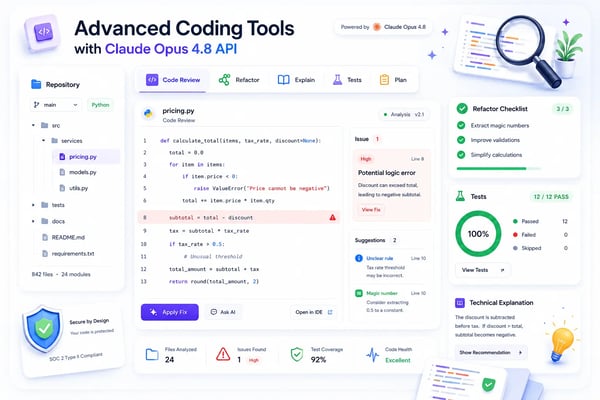
Herramientas de programación avanzada con la API de Claude Opus 4.8
Software teams can use Claude Opus 4.8 API to support code review, debugging, refactoring, implementation planning, and technical explanation. Its stronger coding and reasoning performance makes it useful when an application needs to follow detailed constraints, understand project context, and help developers move from issue analysis to practical code changes.
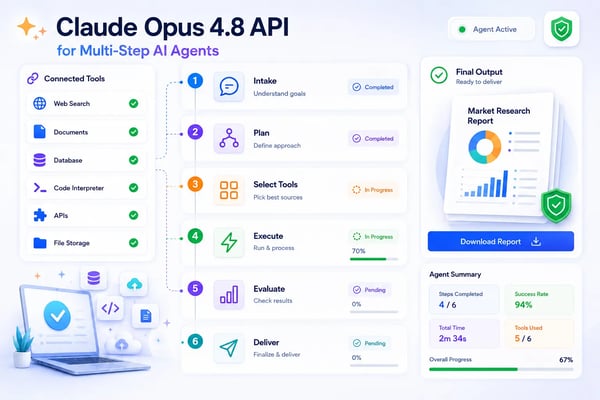
API de Claude Opus 4.8 para agentes de IA de varios pasos
Agentic products can use Claude Opus 4.8 API for planning, task execution, progress evaluation, and result review across complex workflows. This fits internal copilots, automation agents, technical assistants, and workflow systems that need to handle multi-stage instructions instead of returning a single short response.
Investigación y revisión de documentos con la API de Claude Opus 4.8
Research platforms can apply Claude Opus 4.8 API to summarize long materials, compare information, extract structured insights, and produce clear analysis from reports, policies, technical documents, or internal knowledge bases. Its improved honesty around uncertainty helps users identify where information may need further review.

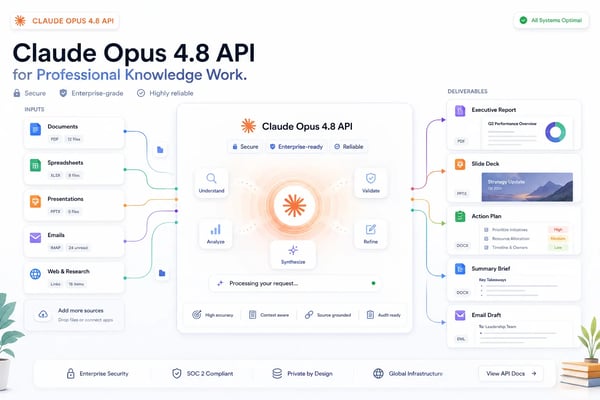
API de Claude Opus 4.8 para el trabajo de conocimiento profesional
Business and productivity tools can use Claude Opus 4.8 API for drafting reports, preparing briefs, organizing meeting notes, building presentation outlines, reviewing internal content, and creating structured deliverables. This is useful for teams that need AI support for high-value work where clarity, consistency, and careful judgment matter.
Por qué los desarrolladores eligen EMix.ai para integrar la API de Claude Opus 4.8
Precios rentables de la API de Claude Opus 4.8 para pruebas flexibles
Los desarrolladores pueden usar EMix.ai para probar la API de Claude Opus 4.8 en escenarios de flujos de trabajo reales antes de pasar a producción a gran escala. Esto es de gran utilidad para los equipos que necesitan evaluar la calidad de los prompts, la consistencia de las respuestas, el comportamiento de razonamiento y el rendimiento de las tareas en agentes de código, herramientas de investigación, copilotos internos o sistemas de análisis de documentos.
Documentación completa de la API de Claude Opus 4.8 para facilitar la integración
Contar con una documentación clara es fundamental cuando los equipos pasan de la fase de pruebas a producción. EMix.ai proporciona documentación de la API para ayudar a los desarrolladores a comprender la estructura de las solicitudes, la autenticación, los parámetros admitidos, el acceso al modelo y los detalles de implementación. Antes del despliegue, revisa siempre la documentación más reciente de la API para conocer la configuración actual de la API de Claude Opus 4.8.
Soporte 24/7 para la API de Claude Opus 4.8 para flujos de trabajo de desarrolladores
Los problemas técnicos pueden ralentizar el desarrollo de productos de IA, especialmente cuando los equipos crean flujos de trabajo basados en agentes, asistentes de código o aplicaciones con gran volumen de documentos. EMix.ai ofrece soporte 24/7 para ayudar a los desarrolladores a resolver dudas de integración, problemas de uso de la API y necesidades de configuración de flujos de trabajo al construir con la API de Claude Opus 4.8.
Múltiples modelos de IA además de la API de Claude Opus 4.8 en EMix.ai
Muchos sistemas en producción necesitan distintos modelos para diferentes tipos de tareas. EMix.ai proporciona a los desarrolladores acceso a múltiples modelos de IA, lo que facilita comparar la API de Claude Opus 4.8 con otras opciones y elegir el modelo adecuado para cada flujo de trabajo, desde tareas de razonamiento avanzado hasta casos de uso que requieran modelos más rápidos o ligeros.