Ask anything
Start a new conversation below.
API Claude Opus 4.8 для ИИ-агентов в программировании и задач интеллектуального труда
Создавайте ИИ-приложения с улучшенными возможностями программирования, более точной оценкой задач и надежным взаимодействием, используя API Claude Opus 4.8 на EMix.ai.
Что нового в API Claude Opus 4.8
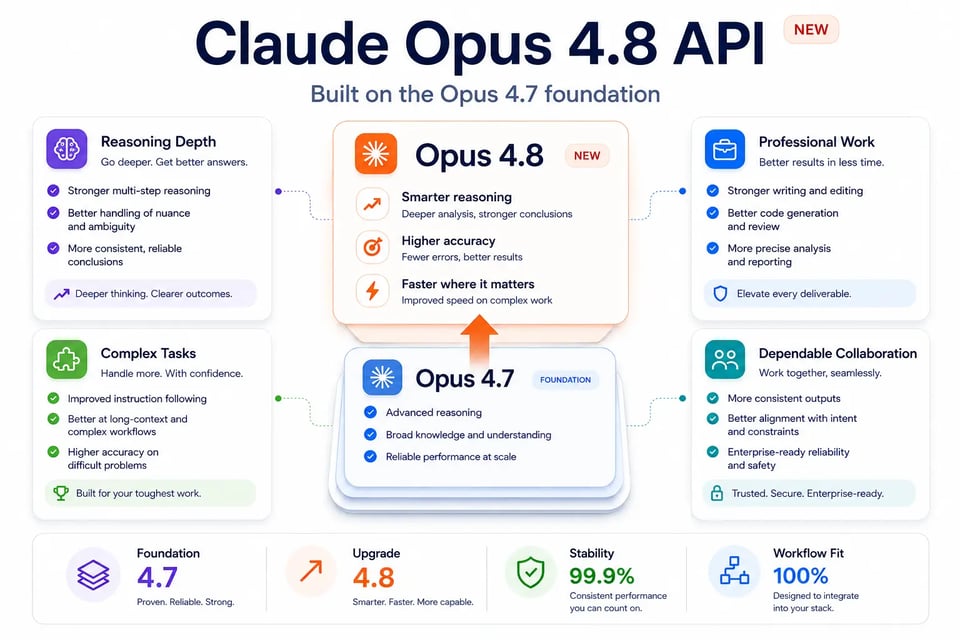
API Claude Opus 4.8 развивает базовые возможности Opus 4.7
Созданный как следующая версия Claude Opus, API Claude Opus 4.8 улучшает фундамент Opus 4.7, сохраняя фокус модели на наиболее важных профессиональных задачах. Разработчики могут использовать его для создания приложений, требующих большей глубины логических выводов, надежного взаимодействия и лучшего управления сложными задачами в технических и интеллектуально сложных рабочих процессах.
Улучшенное агентное программирование, логические выводы и интеллектуальная работа с API Claude Opus 4.8
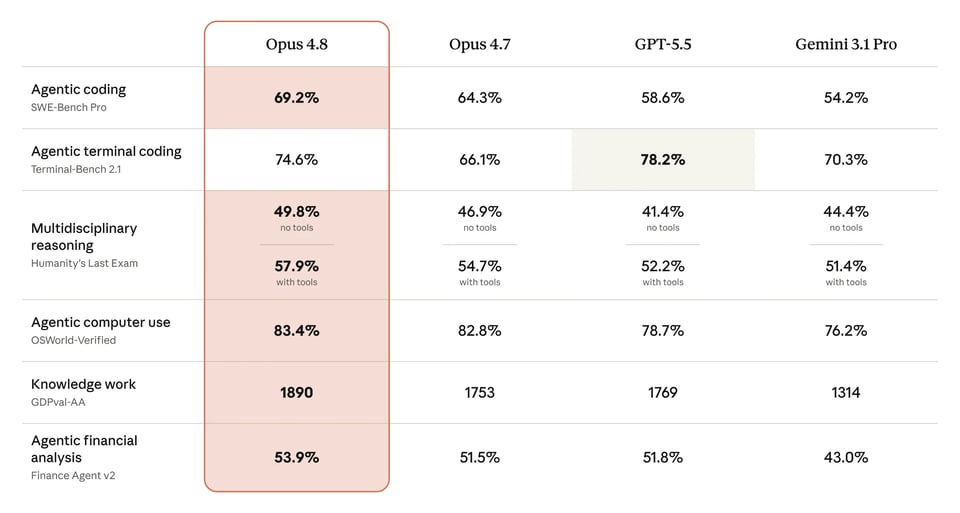
В различных категориях бенчмарков API Claude Opus 4.8 демонстрирует улучшения в таких областях, как программирование, агентные навыки, логическое мышление и решение практических интеллектуальных задач. Это делает его отличным выбором для ИИ-ассистентов разработчиков, исследовательских инструментов, систем автоматизации рабочих процессов, анализа документов и продуктов, которым требуется больше, чем просто базовая генерация текста.
API Claude Opus 4.8 обеспечивает более надежное агентное взаимодействие
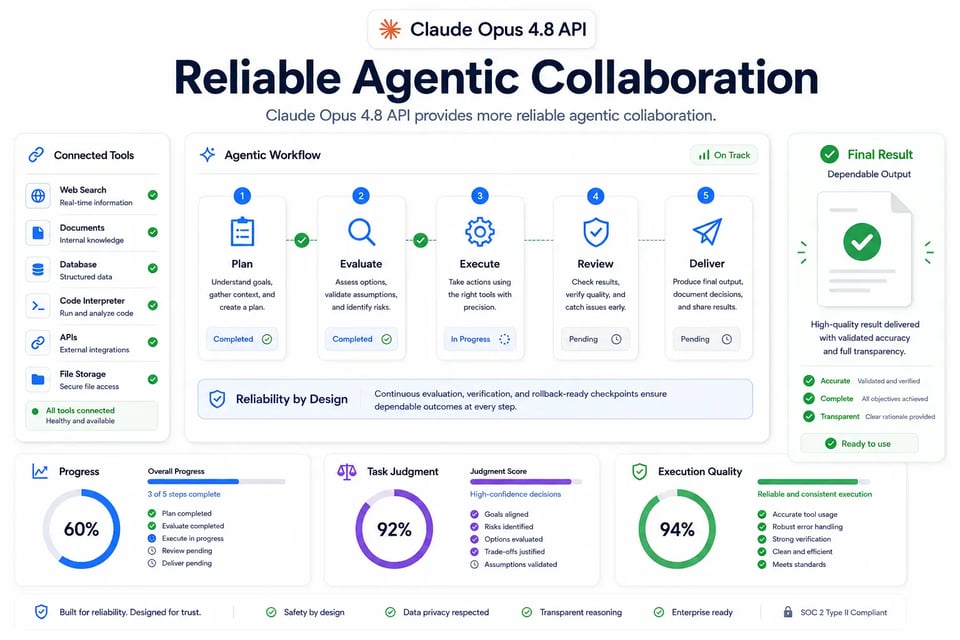
Ранние тесты показывают, что Claude Opus 4.8 проявляет себя как более эффективный помощник при выполнении агентных задач. В рабочих процессах, требующих планирования, оценки прогресса, многоэтапного выполнения и тщательной оценки задач, API Claude Opus 4.8 помогает приложениям обеспечивать более надежный пользовательский опыт.
Повышенная честность и лучшее распознавание ошибок в коде в API Claude Opus 4.8
Ключевое улучшение API Claude Opus 4.8 — повышенная честность при выполнении сложной работы. Вместо уверенных заявлений о достигнутом прогрессе при слабых доказательствах, Claude Opus 4.8 с большей вероятностью укажет на неопределенность и обратит внимание на возможные проблемы. В рабочих процессах, связанных с программированием, модель также реже оставляет без внимания недостатки в собственном сгенерированном коде, что помогает пользователям более эффективно проводить ревью и проверять результаты.
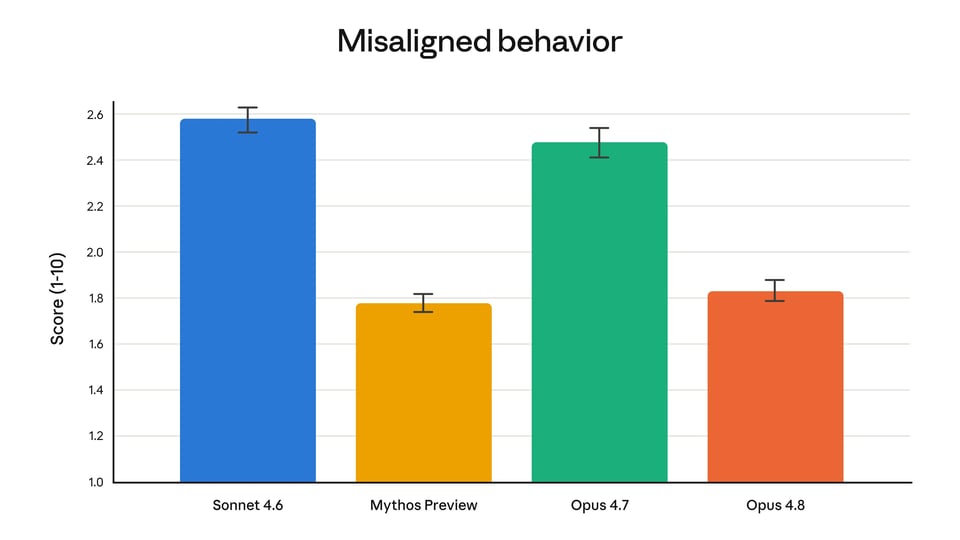
Сравнение Claude Opus 4.8 с другими передовыми ИИ-моделями
Модель Claude Opus 4.8 предназначена для сложного программирования, агентных рассуждений, работы с длинным контекстом и профессиональных задач, где надежность важнее простой скорости. По сравнению с Opus 4.7, она демонстрирует более выверенное поведение и высокую достоверность; по сравнению с Sonnet 5 — лучше подходит для сложных агентных сценариев; по сравнению с GPT 5.5 — имеет преимущества в инженерных задачах со строгими ограничениями при работе с несколькими файлами; а по сравнению с Mythos — остается наиболее практичным и широко доступным выбором уровня Opus для продакшена.
| Параметры сравнения | Claude Opus 4.8 | Claude Opus 4.7 | Claude Sonnet 5 | GPT 5.5 | Claude Mythos |
|---|---|---|---|---|---|
| Model Positioning | Advanced Opus model for complex coding, agentic work, reasoning, and knowledge workflows | Previous Opus version with strong reasoning but less refined behavior | Balanced Claude model for faster, structured, and high-volume workflows | Frontier GPT model with strong coding fluency and general-purpose reasoning | Higher Claude tier for the most difficult reasoning and research tasks |
| Best Fit | Complex agents, large codebase work, long-form analysis, and high-value professional tasks | Workflows already calibrated around Opus 4.7 behavior | Structured tasks, real-time assistants, simpler agent steps, and scalable everyday use | Greenfield coding, test generation, cross-language translation, and developer productivity | Frontier research, hardest reasoning tasks, and specialized advanced workflows |
| Agentic Workflow Strength | Strong for planning, multi-step execution, tool-chain reasoning, and complex task recovery | Capable, but more likely to hedge, drift, or add unnecessary commentary | Reliable for predictable workflows, but weaker on open-ended planning and recovery | Strong general agent support, but task fit depends heavily on prompt and workflow design | Designed for deeper agentic capability, though access may be more limited |
| Coding Performance | Strong for multi-file reasoning, refactoring, bug localization, and constrained implementation | Good coding ability, but less consistent with strict instructions and style constraints | Useful for common coding tasks and structured implementation steps | Strong for first-pass code generation, cross-language translation, and conventional test writing | Expected to target harder coding and reasoning tasks beyond standard Opus-level use |
| Instruction Following | Better at staying aligned with detailed, multi-part instructions across longer tasks | More prone to over-explaining, softening, or adding caveats | Works well when workflows are clearly defined and predictable | Handles conversational prompts well, but may be less precise with strict constraints | Built for advanced reasoning, though practical behavior depends on deployment context |
| Reliability and Judgment | Stronger honesty, better uncertainty awareness, and improved handling of possible code flaws | More likely to hedge or agree with flawed premises without enough pushback | Reliable for routine tasks, but less robust when ambiguity and error recovery increase | Strong output fluency, though constrained tasks may need more review | Highest-capability direction, but not the default practical choice for most builders |
| Long-Context Work | Strong for maintaining task state, tracking dependencies, and preserving context over complex workflows | Good long-context ability, but less stable in demanding sessions | Handles long contexts, but works best with clearer and more bounded workflows | Capable with long inputs, though context-use behavior depends on task type | Positioned for extended reasoning and very hard context-heavy tasks |
| Practical Choice | Best when quality, reasoning depth, and reliability matter more than speed alone | Useful mainly for comparison or legacy workflows | Good for simpler, faster, or more structured steps in a multi-model workflow | Strong alternative for coding fluency, testing, and broad developer productivity | Worth watching for frontier tasks, while Opus 4.8 is more practical for current production use |
Как разработчикам начать разработку с API Claude Opus 4.8 на EMix.ai
Начните работу с нашим продуктом всего за несколько простых шагов...
Шаг 1. Создайте аккаунт EMix.ai и откройте дашборд API
Шаг 2. Сгенерируйте API-ключ Claude Opus 4.8
Шаг 3. Создайте свой первый сценарий интеграции с API Claude Opus 4.8
Шаг 4: Оценка результатов и оптимизация для продакшена
Что разработчики могут создать с помощью API Claude Opus 4.8
Продвинутые инструменты для разработки с API Claude Opus 4.8
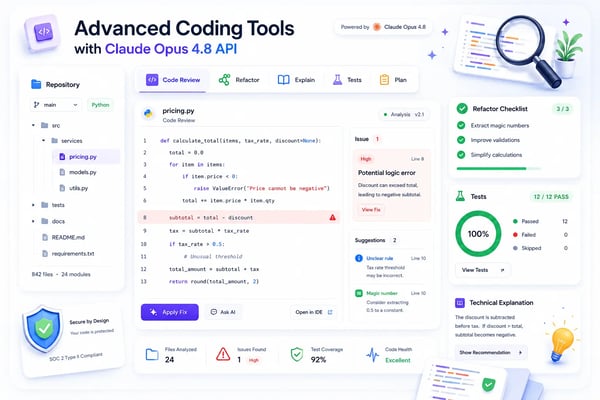
Software teams can use Claude Opus 4.8 API to support code review, debugging, refactoring, implementation planning, and technical explanation. Its stronger coding and reasoning performance makes it useful when an application needs to follow detailed constraints, understand project context, and help developers move from issue analysis to practical code changes.
API Claude Opus 4.8 для многошаговых ИИ-агентов
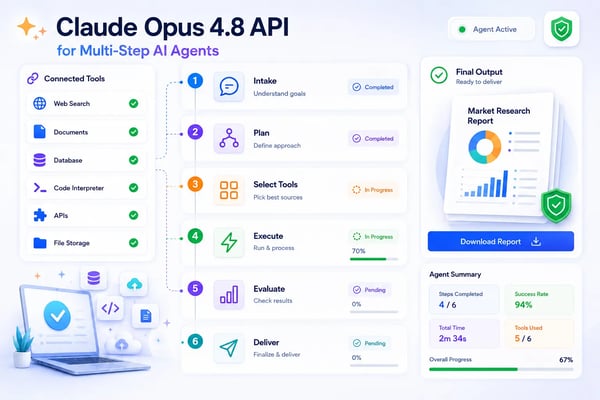
Agentic products can use Claude Opus 4.8 API for planning, task execution, progress evaluation, and result review across complex workflows. This fits internal copilots, automation agents, technical assistants, and workflow systems that need to handle multi-stage instructions instead of returning a single short response.
Анализ исследований и документов с API Claude Opus 4.8
Research platforms can apply Claude Opus 4.8 API to summarize long materials, compare information, extract structured insights, and produce clear analysis from reports, policies, technical documents, or internal knowledge bases. Its improved honesty around uncertainty helps users identify where information may need further review.

API Claude Opus 4.8 для профессиональной интеллектуальной работы
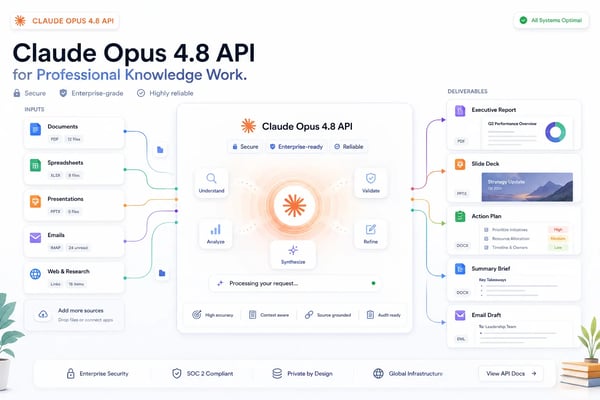
Business and productivity tools can use Claude Opus 4.8 API for drafting reports, preparing briefs, organizing meeting notes, building presentation outlines, reviewing internal content, and creating structured deliverables. This is useful for teams that need AI support for high-value work where clarity, consistency, and careful judgment matter.
Почему разработчики выбирают EMix.ai для интеграции с API Claude Opus 4.8
Выгодные тарифы на API Claude Opus 4.8 для гибкого тестирования
Разработчики могут использовать EMix.ai для тестирования API Claude Opus 4.8 в реальных сценариях рабочих процессов перед переходом к масштабному использованию в продакшене. Это полезно для команд, которым необходимо оценить качество промптов, стабильность ответов, логику рассуждений и производительность выполнения задач в агентах для программирования, исследовательских инструментах, внутренних ИИ-ассистентах или системах анализа документов.
Полная документация к API Claude Opus 4.8 для простой интеграции
Понятная документация важна при переходе команд от тестирования к продакшену. EMix.ai предоставляет документацию по API, чтобы помочь разработчикам разобраться в структуре запросов, аутентификации, поддерживаемых параметрах, доступе к моделям и деталях реализации. Перед развертыванием всегда проверяйте последнюю документацию по API для текущей конфигурации API Claude Opus 4.8.
Круглосуточная поддержка API Claude Opus 4.8 для рабочих процессов разработчиков
Технические сложности могут тормозить разработку ИИ-продуктов, особенно при создании агентных рабочих процессов, ИИ-помощников для программирования или приложений для анализа больших объемов документов. EMix.ai обеспечивает поддержку 24/7, помогая разработчикам решать вопросы интеграции, использования API и настройки рабочих процессов при разработке на базе API Claude Opus 4.8.
Множество ИИ-моделей помимо API Claude Opus 4.8 на EMix.ai
Многим продакшен-системам требуются разные модели для различных типов задач. EMix.ai предоставляет разработчикам доступ к множеству ИИ-моделей, что упрощает сравнение API Claude Opus 4.8 с другими решениями и позволяет выбрать подходящую модель для каждого рабочего процесса: от сложных задач рассуждения до сценариев, требующих более быстрых или легких моделей.