Text description for the video generation
Drag, paste, or click to upload
JPEG · PNG · up to 10MB · max 1 files
URL of the image to be used for the video
The duration of the generated video in seconds
Resolution of the generated video
Explore different use cases and parameter configurations
The text description of the video you want to generate
The duration of the generated video in seconds
The aspect ratio of the generated video frame
Resolution of the generated video
Explore different use cases and parameter configurations
API Kling 3.0 Turbo для быстрого кинематографического видео и синхронизации речи
Генерируйте ИИ-видео из промптов или изображений с быстрой генерацией, синхронизацией звука и изображения, кинематографическим визуальным качеством и эффективным доступом к API Kling 3.0 Turbo для профессиональных видеопроектов.
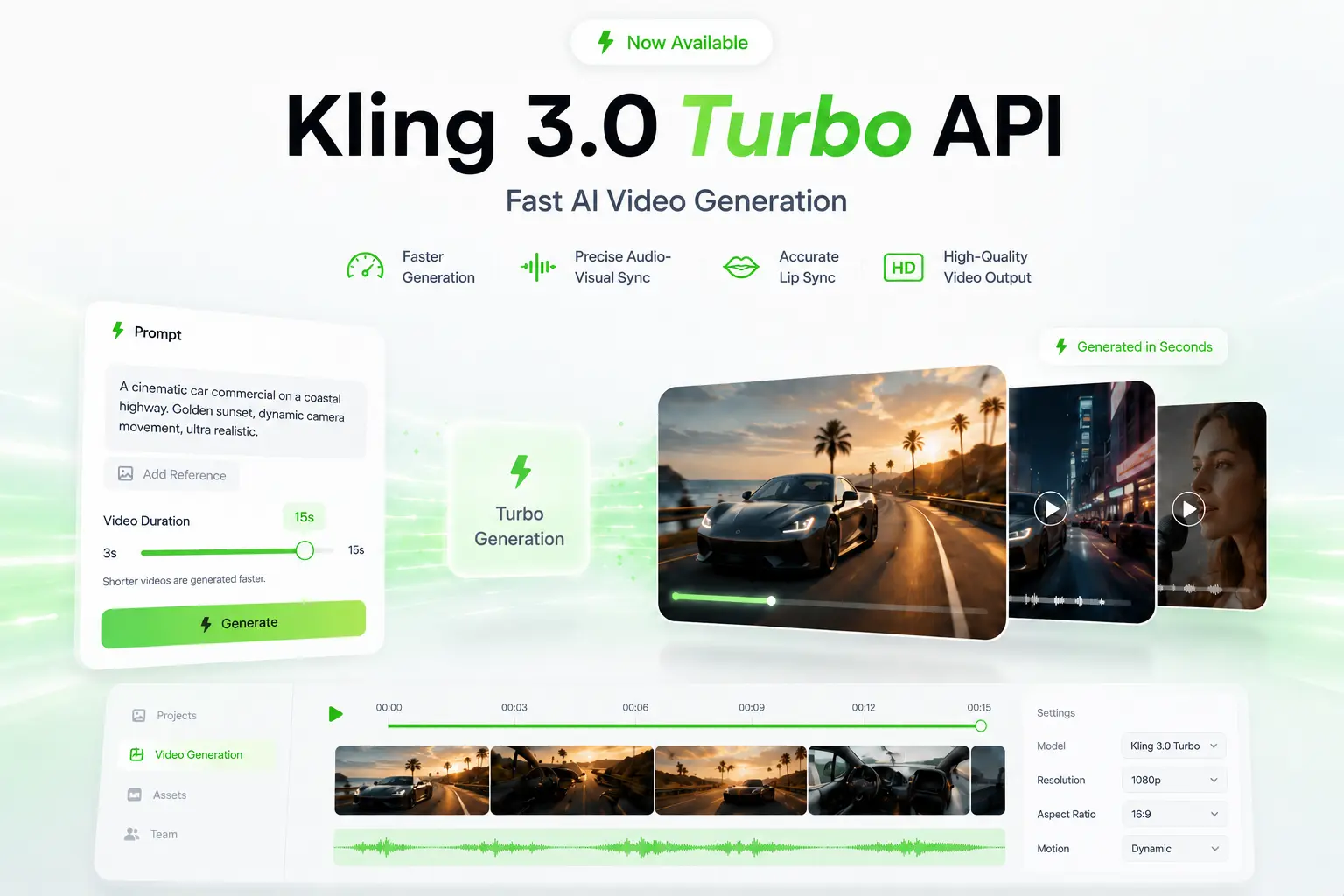
Ключевые преимущества Kling 3.0 Turbo API для генерации AI-видео
Создавайте больше вариантов видео быстрее с API Kling 3.0 Turbo
Скорость напрямую влияет на удобство использования рабочего процесса ИИ-видеогенерации. API Kling 3.0 Turbo сокращает путь от промпта или изображения до готового видео, упрощая просмотр, корректировку и повторную генерацию без замедления творческого процесса. Для команд, которым необходимо частое тестирование или несколько визуальных концепций, ускоренный цикл обработки повышает как эффективность производства, так и удобство для пользователей.
Синхронизируйте движение и звук с API Kling 3.0 Turbo
Синхронизация аудио и видео критически важна, когда сгенерированные клипы содержат речь, ритм, музыку или звуковое сопровождение. Kling 3.0 Turbo API улучшает взаимодействие между визуальным движением и тактом аудио, делая итоговое видео более целостным, стабильным и убедительным — без неприятного рассинхрона между картинкой и звуком.
Создавайте чистые, кинематографичные видео с Kling 3.0 Turbo API
Качество видео определяется не только чёткостью кадра. Kling 3.0 Turbo API позволяет создавать видео с плавным движением, чёткой световой структурой, стабильной атмосферой сцены и профессиональной кинематографичной подачей. Результат идеально подходит для рабочих процессов, где сгенерированные видео должны выглядеть достаточно отточенно для просмотра, итерации и практического применения в творческих проектах.
Как начать работу с Kling 3.0 Turbo API через EMix.ai
Начните пользоваться нашим продуктом всего в несколько шагов...
Шаг 1: Войдите в систему и получите API-ключ Kling 3.0 Turbo
Шаг 2: Протестируйте Kling 3.0 Turbo API в песочнице
Шаг 3: Развёртывание Kling 3.0 Turbo API в бэкенд-процессе
Шаг 4: Запуск Kling 3.0 Turbo API в продакшн
Что можно создать с помощью Kling 3.0 Turbo API
Видео для анонса продуктов с Kling 3.0 Turbo API
Бренды в сфере e-commerce и розничные команды могут создавать короткие видео для запуска продуктов: показывать новинку в движении, подчёркивать фактуру и детали товара, представлять его в динамичном визуальном оформлении. Kling 3.0 Turbo API способен превратить описания продуктов, каталожные изображения, рекламные материалы или фотографии-референсы в готовые ролики для страниц товаров, рекламы в соцсетях, карточек на маркетплейсах и промо-лендингов.
Короткие ролики для социальных кампаний с Kling 3.0 Turbo API
Маркетинговые команды могут создавать компактные рекламные видео с цепляющим началом, динамичным визуальным ритмом и форматом, подходящим для любых платформ. Kling V3.0 Turbo API отлично подходит для анонсов распродаж, сезонных акций, брендовых тизеров, контента в духе креаторов и коротких социальных видео для брендов в сферах моды, красоты, еды, бытовой электроники, стиля жизни и местных сервисных компаний.
Промо-клипы для ресторанов и еды с Kling V3 Turbo API
Рестораны, кафе, службы доставки и продовольственные бренды могут создавать аппетитные короткие видео на основе фото меню, описаний блюд или маркетинговых идей. Kling V3 Turbo API поддерживает динамичные крупные планы блюд, эффекты пара, изменения освещения, застольные сцены, моменты с ингредиентами и стильные промо-ролики для страниц ресторанов, страниц в сервисах доставки, публикаций в соцсетях и кампаний с сезонным меню.
Видео о путешествиях и стиле жизни с Kling 3.0 Turbo API
Команды в сферах туризма, гостеприимства и стиля жизни могут создавать атмосферные видео на основе описаний направлений, фотографий отелей, фото блюд или материалов кампаний. Kling 3.0 Turbo API позволяет генерировать превью курортов, атмосферные клипы о городах, пляжные сцены, материалы в стиле велнес, тизеры мероприятий и контент для lifestyle-брендов, где движение, атмосфера и картинка важнее сложного сюжета.
Сюжетные клипы с персонажами на основе Kling V3.0 Turbo API
Образовательные, развлекательные платформы и платформы для креаторов могут создавать короткие клипы с персонажами для сюжетных моментов, видео с маскотами, обучающих сцен, диалоговых превью или сюжетных фрагментов. Kling V3.0 Turbo API хорошо подходит для создания видео с ясно выраженным главным объектом, выразительным движением, ритмом сцены и более привлекательным форматом по сравнению со статичными иллюстрациями или текстовым контентом.
Как получить лучшие результаты от Kling V3 Turbo API
Воспользуйтесь этими советами и выжмите максимум из нашей платформы.
Поставьте чёткую творческую задачу для Kling 3.0 Turbo API
Грамотный промпт должен начинаться с обозначения цели видео. Вместо того чтобы указывать только объекты или стилистические ключевые слова, опишите, каким должен быть результат: презентация продукта, промо ресторана, сцена путешествия, момент с персонажем, кинематографическая заставка или короткий ролик для социальных сетей. Это даёт Kling 3.0 Turbo API более чёткое направление, прежде чем добавлять детали о движении, освещении, ракурсе камеры и темпе.
Чётко обозначьте объект съёмки и действие в промптах Kling V3.0 Turbo API
Главный объект съёмки должен быть сразу понятен, а действие — достаточно конкретным, чтобы задать направление видео. Продукт может медленно вращаться на студийном столе, десерт можно оформить в тёплом освещении кафе, или персонаж может войти в кадр и посмотреть в камеру. Чёткое описание объекта и действия помогает Kling V3.0 Turbo API создавать более сфокусированное видео вместо хаотичных или нечётких движений.
Добавьте движение камеры для управления видео в Kling V3 Turbo API
Направление камеры помогает задать ощущение сцены в динамике. Вы можете описать медленное приближение, крупный план с раскрытием, плавную панораму, боковое сопровождение объекта, вид сверху, плавное круговое движение камеры или съёмку с руки. Эти детали дают Kling V3 Turbo API более чёткое представление о визуальном потоке и помогают сделать итоговое видео более осмысленным и цельным.
Задавайте освещение и стиль для результатов Kling 3.0 Turbo API
Визуальный стиль должен соответствовать типу создаваемого контента. Для ролика о продукте может потребоваться чистое студийное освещение, для видео о еде — тёплые естественные тона, а для сцены в путешествии — мягкий дневной свет или кинематографичные закатные тона. Чёткие инструкции по освещению и стилю помогают Kling 3.0 Turbo API создавать более целостный результат вместо шаблонной анимации.
Добавляйте указания по таймингу для синхронизации аудио в Kling V3.0 Turbo API
Если звук важен, в промпте следует описать, как движение и аудио должны быть связаны между собой. Презентация продукта может совпадать с битом музыки, движение камеры — идти в ритм, а выражение лица персонажа — соответствовать произносимой реплике. Добавление указаний по таймингу помогает Kling V3.0 Turbo API генерировать клипы, в которых движение, темп и аудио ощущаются согласованно.
Почему стоит выбрать Kling 3.0 Turbo API на EMix.ai
Выгодные тарифы Kling 3.0 Turbo API
Kling 3.0 Turbo API is suitable for teams that need repeated video generation, prompt testing, creative variations, and scalable short-form production. EMix.ai gives developers a practical pricing path for exploring video outputs, comparing different requests, and expanding usage as product demand grows. For current billing details, check the latest Kling 3.0 Turbo API pricing information on EMix.ai.
Подробная документация Kling V3.0 Turbo API для интеграции
A stable video generation workflow depends on clear request structure, supported parameters, input rules, task handling, and output retrieval. EMix.ai provides Kling V3.0 Turbo API documentation to help developers understand how to configure requests, manage generation status, process results, and keep implementation aligned with current API capabilities.
Бесперебойная работа Kling V3 Turbo API в режиме 24/7
Video products may serve users across different regions, time zones, and usage patterns. EMix.ai supports continuous Kling V3 Turbo API access for teams building creator tools, marketing platforms, e-commerce video systems, and automated content workflows that need reliable generation availability beyond local working hours.
На EMix.ai доступно несколько AI-моделей Kling для генерации видео
EMix.ai provides access to multiple Kling AI video models, giving developers more flexibility when choosing the right model for different video generation needs. Teams can test Kling 3.0 Turbo API for faster workflows while also comparing other Kling model options for quality, control, or production requirements as their video features evolve.