Ask anything
Start a new conversation below.
面向编程智能体与知识型工作的 Claude Opus 4.8 API
借助 EMix.ai 提供的 Claude Opus 4.8 API,构建具备更强编程能力、更敏锐任务判断以及更可靠协作体验的 AI 应用。
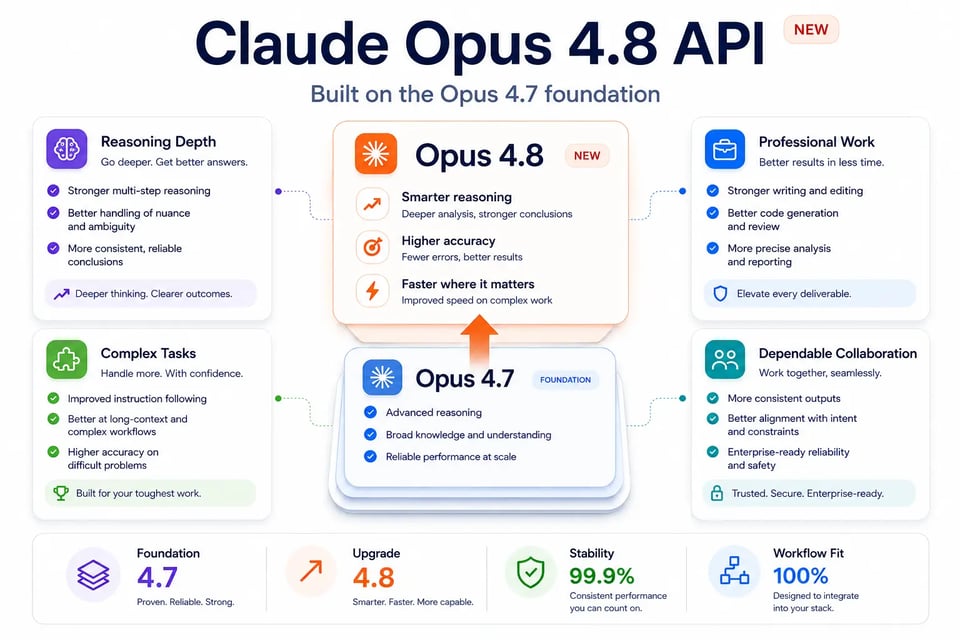
Claude Opus 4.8 API 的新特性
Claude Opus 4.8 API 对 Opus 4.7 基础模型进行了升级
作为 Claude Opus 的下一代版本,Claude Opus 4.8 API 在 Opus 4.7 的基础上进行了提升,并保持对高价值专业工作的专注。开发者可将其应用于需要更强推理深度、更可靠协作,以及需要更好地处理技术与知识密集型工作流中复杂任务的应用场景。
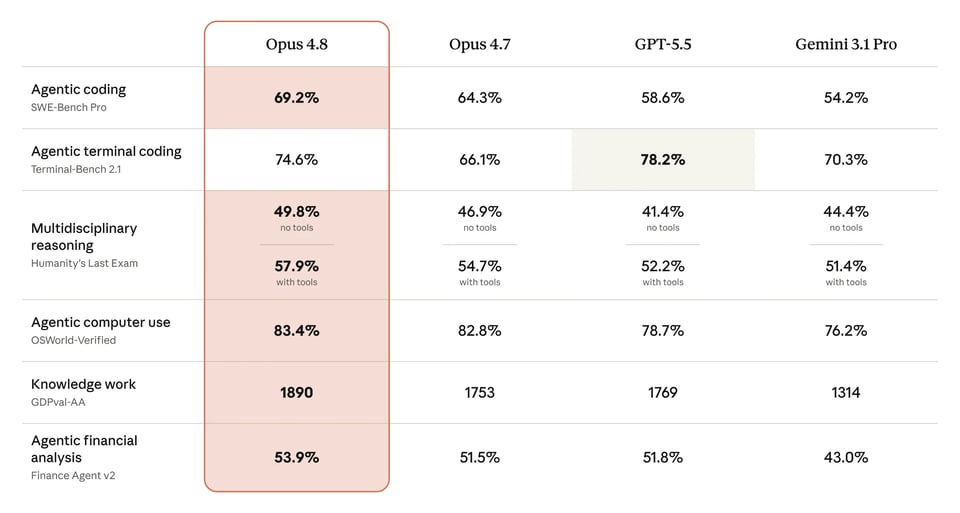
借助 Claude Opus 4.8 API,实现更强的编程、智能体推理与知识型工作
在各项基准测试类别中,Claude Opus 4.8 API 在编程、Agent 技能、推理及实际知识工作等方面均有提升。这使得 Claude Opus 4.8 API 成为软件工程助手、研究工具、工作流 Agent、文档分析系统,以及不仅需要基础文本生成能力的应用产品的理想选择。
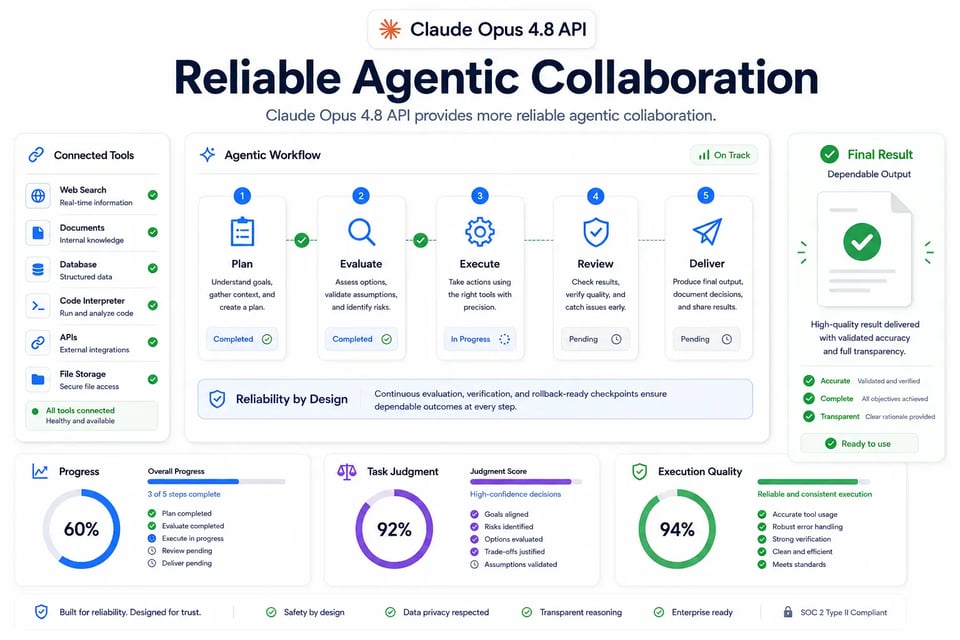
Claude Opus 4.8 API:提供更可靠的 Agent 协作体验
早期测试表明,在执行 Agent 任务时,Claude Opus 4.8 展现出了更出色的协作能力。对于需要制定计划、评估进度、多步执行以及严谨的任务判断的工作流,Claude Opus 4.8 API 能够助力应用交付更加可靠的用户体验。
Claude Opus 4.8 API:更高的诚实度与代码问题感知能力
Claude Opus 4.8 API 的一项核心改进在于其处理复杂任务时具备更高的诚实度。当进展证据不足时,Claude Opus 4.8 不会盲目自信地声称取得了进展,而是更倾向于主动提示不确定性,并提醒用户关注潜在问题。在编程工作流中,它也更少对自身生成代码中的缺陷避而不谈,从而帮助用户更高效地进行代码审查与结果验证。
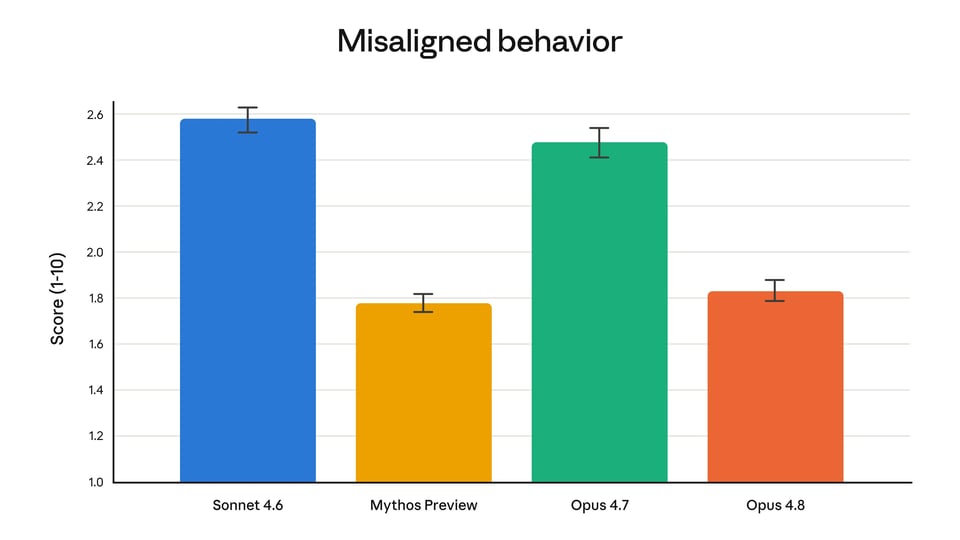
Claude Opus 4.8 与其他高级 AI 模型的对比
Claude Opus 4.8 模型专为复杂编程、智能体推理、长文本处理及专业知识任务打造,在这些场景下,结果的可靠性远比单纯的响应速度更关键。相比 Opus 4.7,它的行为表现更细腻,也更加诚实可靠;相比 Sonnet 5,它能更好地胜任高难度的智能体工作流;对比 GPT 5.5,它在受限的多文件工程任务中优势显著;而对比 Mythos,它依然是生产环境中更为实用且广泛可用的 Opus 级别首选。
| 对比维度 | Claude Opus 4.8 | Claude Opus 4.7 | Claude Sonnet 5 | GPT 5.5 | Claude Mythos |
|---|---|---|---|---|---|
| Model Positioning | Advanced Opus model for complex coding, agentic work, reasoning, and knowledge workflows | Previous Opus version with strong reasoning but less refined behavior | Balanced Claude model for faster, structured, and high-volume workflows | Frontier GPT model with strong coding fluency and general-purpose reasoning | Higher Claude tier for the most difficult reasoning and research tasks |
| Best Fit | Complex agents, large codebase work, long-form analysis, and high-value professional tasks | Workflows already calibrated around Opus 4.7 behavior | Structured tasks, real-time assistants, simpler agent steps, and scalable everyday use | Greenfield coding, test generation, cross-language translation, and developer productivity | Frontier research, hardest reasoning tasks, and specialized advanced workflows |
| Agentic Workflow Strength | Strong for planning, multi-step execution, tool-chain reasoning, and complex task recovery | Capable, but more likely to hedge, drift, or add unnecessary commentary | Reliable for predictable workflows, but weaker on open-ended planning and recovery | Strong general agent support, but task fit depends heavily on prompt and workflow design | Designed for deeper agentic capability, though access may be more limited |
| Coding Performance | Strong for multi-file reasoning, refactoring, bug localization, and constrained implementation | Good coding ability, but less consistent with strict instructions and style constraints | Useful for common coding tasks and structured implementation steps | Strong for first-pass code generation, cross-language translation, and conventional test writing | Expected to target harder coding and reasoning tasks beyond standard Opus-level use |
| Instruction Following | Better at staying aligned with detailed, multi-part instructions across longer tasks | More prone to over-explaining, softening, or adding caveats | Works well when workflows are clearly defined and predictable | Handles conversational prompts well, but may be less precise with strict constraints | Built for advanced reasoning, though practical behavior depends on deployment context |
| Reliability and Judgment | Stronger honesty, better uncertainty awareness, and improved handling of possible code flaws | More likely to hedge or agree with flawed premises without enough pushback | Reliable for routine tasks, but less robust when ambiguity and error recovery increase | Strong output fluency, though constrained tasks may need more review | Highest-capability direction, but not the default practical choice for most builders |
| Long-Context Work | Strong for maintaining task state, tracking dependencies, and preserving context over complex workflows | Good long-context ability, but less stable in demanding sessions | Handles long contexts, but works best with clearer and more bounded workflows | Capable with long inputs, though context-use behavior depends on task type | Positioned for extended reasoning and very hard context-heavy tasks |
| Practical Choice | Best when quality, reasoning depth, and reliability matter more than speed alone | Useful mainly for comparison or legacy workflows | Good for simpler, faster, or more structured steps in a multi-model workflow | Strong alternative for coding fluency, testing, and broad developer productivity | Worth watching for frontier tasks, while Opus 4.8 is more practical for current production use |
开发者如何在 EMix.ai 上开始使用 Claude Opus 4.8 API 构建应用
只需几个简单步骤,即可开始使用我们的产品...
第一步:创建 EMix.ai 账号并进入 API 控制台
第二步:生成您的 Claude Opus 4.8 API 密钥
第三步:构建您的首个 Claude Opus 4.8 API 工作流
第 4 步:评估输出并为生产环境进行优化
开发者可以用 Claude Opus 4.8 API 构建什么?
基于 Claude Opus 4.8 API 的高级编程工具
Software teams can use Claude Opus 4.8 API to support code review, debugging, refactoring, implementation planning, and technical explanation. Its stronger coding and reasoning performance makes it useful when an application needs to follow detailed constraints, understand project context, and help developers move from issue analysis to practical code changes.
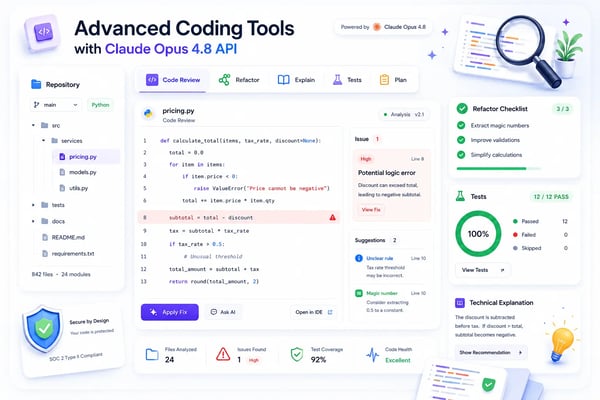
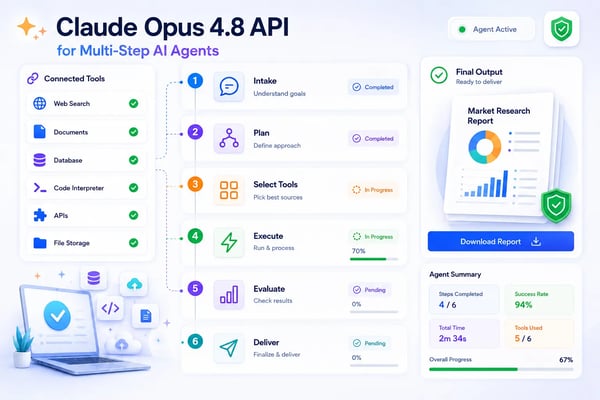
为多步 AI 智能体打造的 Claude Opus 4.8 API
Agentic products can use Claude Opus 4.8 API for planning, task execution, progress evaluation, and result review across complex workflows. This fits internal copilots, automation agents, technical assistants, and workflow systems that need to handle multi-stage instructions instead of returning a single short response.
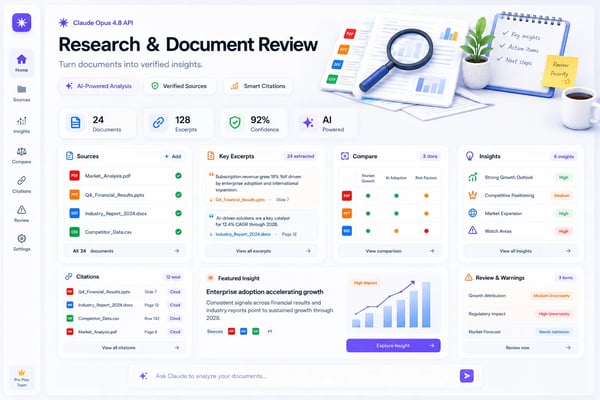
使用 Claude Opus 4.8 API 进行研究与文档审查
Research platforms can apply Claude Opus 4.8 API to summarize long materials, compare information, extract structured insights, and produce clear analysis from reports, policies, technical documents, or internal knowledge bases. Its improved honesty around uncertainty helps users identify where information may need further review.
赋能专业知识工作流的 Claude Opus 4.8 API
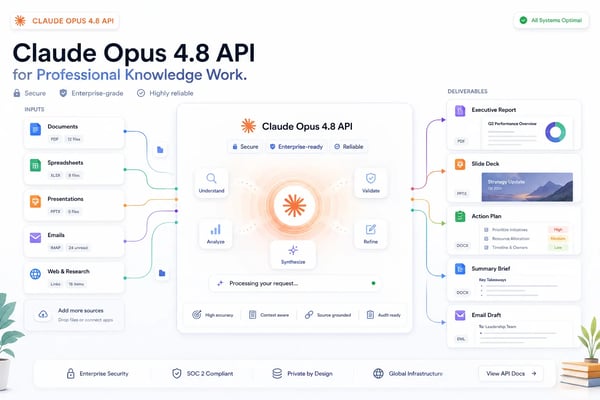
Business and productivity tools can use Claude Opus 4.8 API for drafting reports, preparing briefs, organizing meeting notes, building presentation outlines, reviewing internal content, and creating structured deliverables. This is useful for teams that need AI support for high-value work where clarity, consistency, and careful judgment matter.
为什么开发者选择 EMix.ai 来集成 Claude Opus 4.8 API
Claude Opus 4.8 API 定价极具性价比,方便您灵活测试
在大规模投入生产环境之前,开发者可以通过 EMix.ai 在真实的业务工作流中测试 Claude Opus 4.8 API。无论是开发代码智能体、研究工具、内部 Copilot 还是文档分析系统,团队都可以借此全面评估提示词(Prompt)质量、响应一致性、推理能力以及任务的实际表现。
详尽的 Claude Opus 4.8 API 文档,让集成更轻松
当团队从测试阶段进入生产环境时,清晰的文档至关重要。EMix.ai 提供完善的 API 开发文档,帮助开发者快速掌握请求结构、身份鉴权、支持参数、模型调用及具体实现细节。在正式部署前,请务必查阅最新的 API 文档,以获取 Claude Opus 4.8 API 的当前配置信息。
7x24 小时 Claude Opus 4.8 API 支持,助力开发者工作流
技术问题往往会拖慢 AI 产品的开发进度,在团队构建智能体(Agent)工作流、代码助手或长文档应用时尤为明显。EMix.ai 提供 7x24 小时全天候技术支持,帮助开发者在使用 Claude Opus 4.8 API 时,轻松解决接口集成、API 调用及工作流配置等各类难题。
EMix.ai 聚合包含 Claude Opus 4.8 API 在内的多种 AI 模型
在实际的生产系统中,不同的任务类型往往需要匹配不同的模型。EMix.ai 为开发者提供多种 AI 模型的便捷接入,让您能轻松将 Claude Opus 4.8 API 与其他选项进行横向对比,为每一个工作流挑选最合适的模型——无论是复杂的深度推理任务,还是对速度和轻量化有更高要求的应用场景。