A text description of the desired output. Maximum length is 2500 characters.
Drag, paste, or click to upload
JPEG · PNG · JPG · up to 10MB · max 1 files
Reference image. The characters, backgrounds, and other elements in the generated video are based on the reference image. Supports .jpg/.jpeg/.png, max 10MB, size needs to be greater than 300px, aspect ratio 2:5 to 5:2.
Drag, paste, or click to upload
MP4 · QUICKTIME · X-MATROSKA · up to 100MB · max 1 files
Reference video. The character actions in the generated video are consistent with the reference video. Supports .mp4/.mov, max 100MB, 3-30 seconds duration depending on character_orientation.
Generate the orientation of the characters in the video. 'image': same orientation as the person in the picture (max 10s video). 'video': consistent with the orientation of the characters in the video (max 30s video).
Output resolution mode. Use 'std' for 720p or 'pro' for 1080p.
Explore different use cases and parameter configurations
Kling AI 2.6 Motion Control API for Exact Physics and Motion Alignment
Deploy Kling 2.6 Motion Control API on Emix.ai Featuring Advanced Motion Reference Tracking, Flawless Hand Performances.
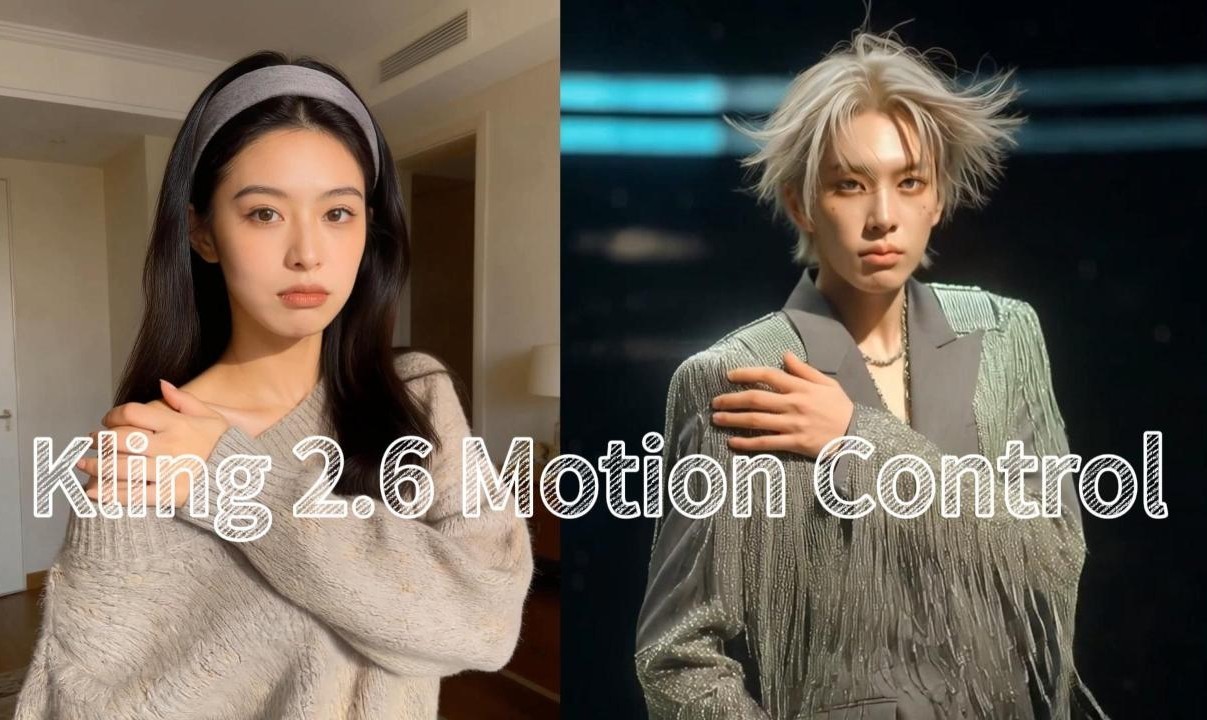
Core Architectural Highlights of the Kling 2.6 Motion Control API
Dual Tiers for the Kling 2.6 Motion Control API
The Kling 2.6 Motion Control API offers a flexible dual-tier architecture designed to balance computational budgets with premium rendering fidelity. Engineering teams can deploy the Standard tier for efficient, resource-conscious rendering or transition to the Pro tier when pristine visual clarity is mandatory. While both versions maintain the exact same underlying tracking precision, the advanced mode delivers cleaner visuals and refined rendering required for cinematic-quality brand videos and virtual presenters.
Synchronized Full-Body Control with Kling AI Motion Control API
Achieving absolute alignment between source choreography and generated characters is seamless using the Kling 2.6 Motion Control API. The system ensures that intricate character physics and complete skeletal structures remain perfectly synchronized with your input motion reference tracking data. This advanced spatial synchronization eliminates structural drift, allowing production pipelines to replicate real-world human gaits, complex choreography, and physical interactions with total fidelity.
Complex Dynamic Rendering via Kling Motion Control API
Handling high-velocity transitions without introducing spatial or visual distortion requires a robust generative foundation. The Kling Motion Control API excels at translating high-difficulty, intricate dynamic behaviors into fluid, natural video streams. By processing sophisticated spatial data, the infrastructure prevents artifacting during fast-paced sequences, ensuring that even the most demanding action scenes retain their narrative continuity and structural realism.
High-Precision Hand Performances in Kling Video 2.6 Motion Control
Capturing nuanced human-object interaction requires an interface dedicated to fine-motor mechanics. The kling video 2.6 motion control engine provides meticulous tracking for hand gestures, accurately capturing the subtle nuances of finger placement, grip adjustments, and manual tool manipulation. This granular control makes it an invaluable technical solution for interactive digital human displays, detailed product demonstrations, and close-up character work.
Extended 30s One-Shot Video Generation Mechanics
Maintaining temporal consistency across extended runtimes is a persistent challenge in automated media workflows. The Kling 2.6 Motion Control API resolves this by natively supporting continuous 30-second continuous action sequences. This single-camera capacity ensures that long narrative segments, sweeping camera pans, and continuous action blocks stay completely coherent from start to finish, removing the need for disruptive post-production stitching.
Multi-Modal Reference in Kling AI 2.6 Motion Control API
Complete creative authority requires an infrastructure that respects specific environmental contexts alongside primary movement data. The Kling AI 2.6 Motion Control API interprets text prompts 、image and video reference metadata with exceptional accuracy, letting developers dictate clothing choices, background details, and specific animal behaviors. This ensures that every secondary background element aligns perfectly with the primary character animation.
Integrating the Kling 2.6 Motion Control API on Emix.ai
Authentication and Kling 2.6 Motion Control API Key Setup
To begin integrating the system, developers must first register an account on the EMix.ai dashboard to provision their Kling 2.6 Motion Control API key. Every authorized request to the backend requires embedding your unique Kling 2.6 Motion Control API key as a Bearer token within the HTTP header to ensure secure access control and monitor credit consumption.
Payload Configuration and Task Submission
To trigger the video synthesis pipeline, developers dispatch an authorized HTTP POST request to the endpoint. The payload routes the model parameter directly to kling-2.6/motion-control while configuring critical execution variables, including the source URLs, character orientation rules, and the target resolution mode.
Callback Implementation and Status Polling
Upon submission, the infrastructure returns a unique identifier used to track processing states across the Kling Motion Control API backend. For enterprise production pipelines, configuring a callback URL allows the system to automatically push the final cinematic video link to your server, though developers can also manually query the status endpoint to retrieve the output.
Optimizing Outputs with the Kling AI 2.6 Motion Control API
Character Framing and Single-Subject Focus
To ensure successful character mapping, the uploaded image reference and motion video must present a clearly visible head, shoulders, and torso free from environmental blockages. When utilizing source footage containing multiple individuals, the tracking system automatically prioritizes the subject occupying the largest portion of the frame. While stylized humanoids are supported, deploying real-world human proportions provides the highest baseline fidelity during physics transfer.
Temporal Continuity and Camera Stability
The source tracking footage must consist of a single continuous shot completely devoid of camera movements, angle changes, or post-production cuts. Any sudden transitions or camera drift within the reference video will disrupt the tracking pipeline, which can lead to the asset being truncated. To achieve optimal visual results, developers should utilize steady, moderate physical movements rather than overly fast or abrupt actions.
Movement Complexity and Processed Output Retention
The final video duration is heavily influenced by the structural clarity and overall execution speed of the source performance. If the choreography is excessively complex or performed at an intense pace, the underlying model filters out unstable frames and only renders segments with verified continuous motion. Developers should adjust action difficulty and velocity beforehand to ensure full asset retention and prevent unexpected rendering reductions.
Character Orientation Routing Configuration
Developers can precisely govern spatial physics by configuring the orientation parameters detailed in the official Kling 2.6 Motion Control API documentation. Setting the system to track the video source forces the generated subject’s movement, facial expression, and camera perspective to mirror the clip. Alternatively, selecting the image-driven configuration anchors the character's facing direction to the static source photograph while continuing to map dynamic expressions from the motion reference.
Why Choose Emix.ai for Integrating the Kling 2.6 Motion Control API
24/7 Technical Support
Emix.ai provides uninterrupted professional technical support to maintain operational stability. Engineering teams can access deployment assistance and performance troubleshooting for the Kling 2.6 Motion Control API at any time, ensuring minimal downtime for production pipelines.
Comprehensive Kling 2.6 Motion Control API Documentation
Emix.ai offers clean, structured technical reference materials to streamline the integration process. Developers can easily locate request frameworks, parameter definitions, and error handling protocols for the Kling AI Motion Control API without unnecessary overhead.
Affordable Kling 2.6 Motion Control API Pricing Model
Optimizing computational budgets is straightforward with the EMix.ai's transparent and competitive cost structure. To analyze specific billing tiers and volume rates for the Kling Motion Control API, development teams can consult the latest quotation data on Emix.ai.
Continuously Updated Repository
The EMix.ai maintains a rapidly expanding marketplace, ensuring immediate access to the latest generative updates. This infrastructure allows enterprise systems to deploy new versions of the kling video 2.6 motion control engine instantly without modifying existing integration frameworks.
Enterprise Use Cases for the Kling 2.6 Motion Control API
Retail and e-commerce platforms can deploy the Kling 2.6 Motion Control API to automate the creation of high-fidelity virtual promotional assets. By mapping professional human modeling videos onto static digital avatars, the infrastructure synthesizes natural apparel movements and realistic body turns. This programmatic framework allows brands to generate clean, consistent garment demonstrations at scale without requiring recurring live-model production studios.
E-Commerce Virtual Presenters and Digital Showrooms
Developing complex character behavior requires a scalable system that can translate physical human choreography into virtual environments. Studios can utilize the Kling AI Motion Control API to stream motion reference data directly onto custom humanoid concepts and game assets. The system accurately processes intricate dynamic sequences and high-velocity transitions, accelerating early-stage animation pre-visualization and cinematic cutscene prototyping.
Game Character Animation and Prototyping Pipelines
Cinematic production pipelines require strict spatial control when mapping actor reference frames onto digital doubles or stylized characters. The Kling Motion Control API allows technical directors to synchronize full-body spatial physics across extended single-camera sequences without structural distortion. This interface simplifies the visual effects pipeline, enabling production crews to audit continuity and complex spatial layouts prior to rendering the final scenes.
Film and Entertainment Pre-Visualization Workflows
Enterprise customer service systems rely on highly expressive, humanlike behaviors to drive natural user engagement across digital interfaces. Implementing the kling video 2.6 motion control engine allows developers to align nuanced hand gestures and facial expressions with automated service outputs. This granular motion tracking ensures that automated bank tellers, informational kiosk receptionists, and virtual brand ambassadors interact with users with complete physical realism.
Interactive Digital Humans for Customer Service
Frequently Asked Questions About Kling 2.6 Motion Control API
What are the Kling 2.6 Motion Control API's core advantages?
The Kling AI 2.6 Motion Control API focuses entirely on deep physical synchronization, aligning target character mechanics directly with the motion input. This framework preserves complete skeletal integrity and minimizes structural drift during intricate motion sequences.
How does the Kling AI 2.6 Motion Control API eliminate hand artifacts?
Kling Motion Control API utilizes optimized spatial tracking tailored specifically for fine-motor hand and finger movements. This precision isolation eliminates common generative anomalies like overlapping, morphing, or anatomical distortions.
What is the Kling AI 2.6 Motion Control API's maximum continuous duration?
The Kling AI 2.6 Motion Control API supports up to 30 seconds of continuous output in a single rendering pass. This long-form capability eliminates the need for post-production clip stitching, enabling seamless narrative arcs.
Why choose Emix.ai for Kling 2.6 API deployment?
Emix.ai provides high-availability infrastructure featuring 24/7 continuous technical monitoring and low-latency routing. Integrating via this platform handles complex server management automatically while offering a streamlined, updated model marketplace.
What Emix.ai technical support handles pipeline errors?
Emix.ai operates a 24/7 engineering support network to resolve structural pipeline bottlenecks. Technical assistance remains available around the clock to help development teams audit API payloads, resolve error codes, and fix asset mapping failures.
What are the Kling 2.6 API's primary commercial use cases?
The interface automates high-fidelity video synthesis by mapping physical human movement directly onto static images or digital characters. This infrastructure enables automated e-commerce virtual try-ons, accelerates cinematic animation prototyping, and powers highly realistic behaviors for interactive digital humans.